
Guide
Is Pressure Washing Safe for a Brick House?
Brick is hard, but the mortar between the bricks is softer and is what holds the wall together and keeps water out. High pressure erodes mortar joints and can pit older or softer brick, so brick homes are best cleaned with a soft wash and a gentle rinse.
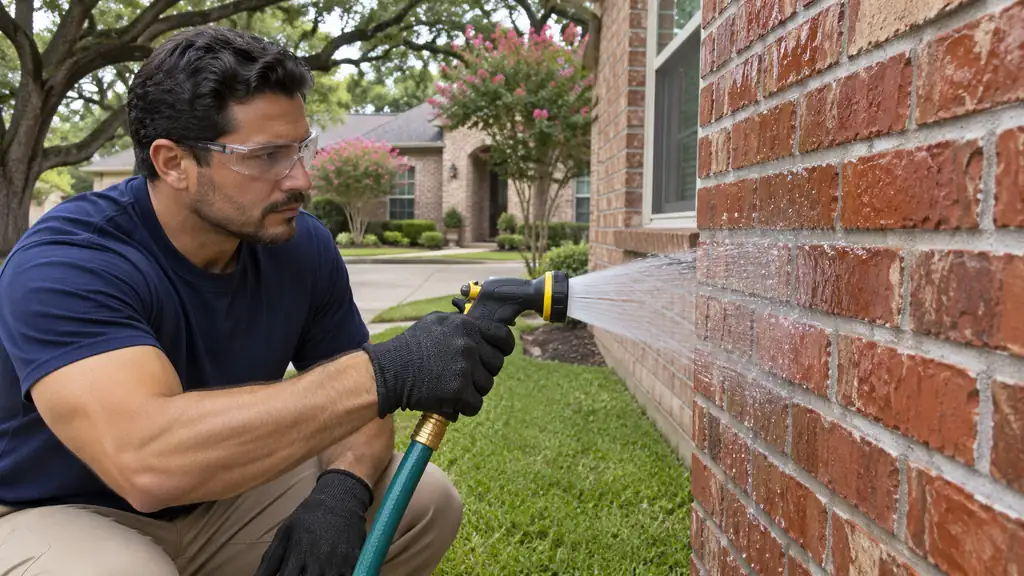
What high pressure does to brick
- Washes out mortar. A narrow, high-pressure stream digs into joints, especially older lime-based mortar, opening paths for water.
- Pits the face. Older and handmade bricks have a softer fired skin; once it is broken, the brick absorbs more water and stains more easily.
- Drives water in. Water forced deep into the wall takes days to dry and can carry salts to the surface as efflorescence.
How brick is cleaned safely
The wall is wetted first so the brick does not soak up the cleaner. A soft wash solution goes on from the bottom up, is left to work on the mildew and dirt, and is rinsed at low pressure from the top down. Weep holes along the bottom course are kept clear. Paint, rust or mortar smears need specific cleaners and are tested on a hidden area first.
White powder on brick: efflorescence
A white, powdery bloom is efflorescence: salts carried out of the brick or mortar by moisture that dry on the surface. It is not mildew, and a mildew cleaner will not remove it. It usually brushes off dry, and stubborn deposits need an efflorescence cleaner. If it keeps coming back, look for the water source: sprinklers hitting the wall, a leaking gutter or soil piled against the brick.
Painted brick
Painted brick is treated like a painted wall: soft wash only, with peeling or chalky paint pointed out before we start, because any loose paint will come off in the rinse.